
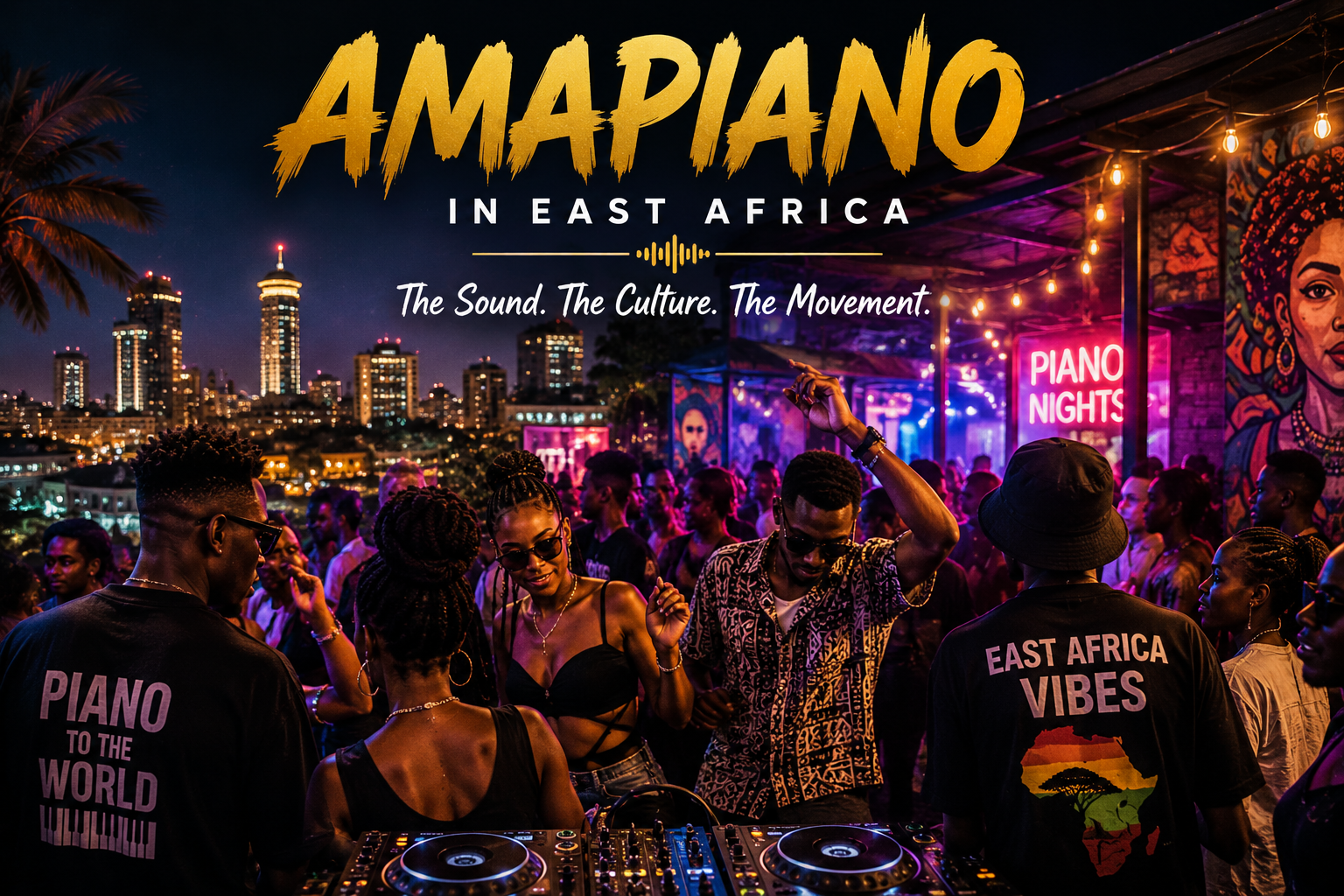
It starts the way so many East African nights begin: with a promise.
Nairobi is warm in that after-dark way—air thick with perfume, grilled meat smoke, and the soft panic of someone realizing they wore the wrong shoes.
Outside the club, headlights wash over a line of bodies dressed like they’re about to be photographed for a music video: clean sneakers, sharp heels, mesh tops, oversized denim, chains that catch the light like tiny disco balls. A couple is arguing in whispers about who “made them late,” which is a whole genre of argument in this city.
Inside, the room is already sweating. The DJ has been feeding the crowd familiar fuel—Afrobeats hits that make shoulders bounce on instinct, choruses so loud you can’t tell if you’re singing or shouting. The bartender slides bottles across the counter like a magician who’s tired of clapping. Somewhere in the middle, someone records a story: the lens pointed at the dancefloor, the caption already typed before the moment even happens.
Then the DJ does it. A brief silence—just long enough for the room to lean forward—before the log drum rolls in like a thunderclap that somehow learned how to flirt. The tempo doesn’t rush. It swaggers. The bass doesn’t just hit; it speaks. Amapiano doesn’t demand your attention with speed. It pulls you in with confidence, like a person who knows they look good and doesn’t need to announce it. You can feel the crowd recognize it in real time.
Someone near the front throws their head back like they’ve been waiting all week for that exact sound. A group of friends forms a circle instantly, like a ritual. A guy in a crisp shirt—who has been standing cool for the last hour—suddenly remembers he has knees. Phones rise. Hips loosen. Even the bouncers do that subtle shoulder movement that says: I’m working, but I’m alive.
This is not just a song change. It’s a cultural switch being flipped.
Welcome to the era of Amapiano in East Africa—where the night is longer, the dance moves are sharper, and youth culture is writing itself in basslines, slang, and TikTok clips that travel faster than planes.
The Sound That Doesn’t Rush: What Is Amapiano?
Amapiano was born in South Africa in the early-to-mid 2010s, in the townships and suburbs around Gauteng—places like Pretoria, Johannesburg, and the surrounding scenes that have always been laboratories for sound. It’s hard to pin down one inventor because Amapiano didn’t arrive like a single genius idea. It rose like smoke from many rooms at once.
The word “Amapiano” loosely translates from Zulu to “the pianos”—a nod to the genre’s jazzy, keyboard-driven melodies. But don’t let the name fool you. Yes, there are pianos. But the real signature is that deep, elastic bass—especially the famous log drum, which thumps and slides like it’s alive.
Amapiano sits somewhere between deep house, jazz, kwaito, and lounge music—but it’s also its own planet. The tempo often floats around 110–115 BPM, slower than the frantic sprint of some club genres, which gives it space to breathe. And in that space, it seduces.
What makes it addictive:
• The log drum: a bass sound that feels like the floor has started speaking.
• The groove-first philosophy: Amapiano is less about the “drop” and more about the journey.
• Warm, melodic keys: music that can feel romantic even when it’s rowdy.
• Vocal chants and ad-libs: sometimes playful, sometimes spiritual, often unforgettable. Globally, Amapiano spread because it’s versatile. It works in clubs. It works at braais. It works in cars with the windows down. It works at 2 p.m. on a Sunday when you swear you’re “just outside for food” and then somehow you’re dancing again.
But in East Africa, Amapiano didn’t just become popular. It became personal.
How the Sound Crossed Borders into East Africa
East Africa has always been musically porous. Sounds move across the region like trade winds: Congolese rumba, Tanzanian Bongo Flava, Kenyan gengetone, Ugandan dancehall, gospel, taarab, hip-hop. The region is used to remixing itself. So when Amapiano arrived, it didn’t feel like an invasion—it felt like a new tool in an already creative toolbox.
1) Social media made the border irrelevant The old model of music travel was slow: radio playlists, TV channels, physical CDs, maybe a touring artist passing through. Now? Amapiano can land in Kampala at lunchtime and be the soundtrack of a Nairobi club by nightfall. Instagram clips, Twitter debates, TikTok dances—these became the new distribution network. One viral dance challenge can do what ten marketing budgets can’t: turn a sound into a shared language.
2) DJs became cultural couriers If East Africa has a ministry of nightlife, DJs are the ministers. They are the ones who test sounds on crowds, who watch what makes people scream, what makes people move, what makes people pull out Shazam like their life depends on it. Amapiano is DJ-friendly: long intros, layered percussion, endless room for mixing. It slides beautifully between Afrobeats and local hits. DJs started dropping Amapiano sets not as an “experiment,” but as a strategy: a way to control the room, to pace the night, to turn the dancefloor into a story with chapters.
3) Streaming platforms changed how fandom works Spotify, Apple Music, Boomplay, Audiomack, YouTube—these platforms didn’t just make Amapiano accessible. They made it searchable, shareable, and addictive. Playlists labeled “Amapiano Vibes” became digital meeting points. People didn’t need to know an underground South African venue to access the sound. They just needed data bundles and curiosity.
4) Pan-African collaboration made it feel like home Amapiano’s rise also coincided with a larger wave: Afrobeats culture Africa—a continent-wide moment where African music stopped asking for permission. As artists collaborated across borders, the sound stopped being “South African music” and started being “our music,” part of the same ecosystem. East African artists began experimenting with the rhythm, adding Swahili hooks, Sheng punchlines, Luganda flavor, and Bongo Flava drama. Amapiano didn’t cross into East Africa like a foreigner. It arrived like a cousin who knows how to dance better than you—and then taught you the steps.
The Nightlife Revolution in East Africa: From Clubs to Weddings
To understand Amapiano’s takeover, you have to understand what nightlife is in East Africa. It’s not just entertainment. It’s a social economy. Nightlife is where people network, flirt, flex, heal, celebrate, and sometimes forget. It’s where trends are tested in the wild. And in the last few years, Amapiano has become one of the dominant forces reshaping that ecosystem—alongside Afrobeats, of course, which remains a heavyweight across the continent.
Nairobi nightlife: Where the cool kids found a new heartbeat Nairobi nightlife has always been a shape-shifter. One weekend it’s high-end lounges with dress codes and champagne. The next it’s underground parties where the DJ booth is basically a shrine.
Amapiano changed the texture of Nairobi nights. It brought: • More groove, less rush: People dance longer because the music holds them instead of exhausting them. • A different kind of swagger: less “jump jump,” more hips, shoulders, footwork. • New themed nights: “Piano Nights” became the phrase that could pack a venue.
In Nairobi, Amapiano also fused beautifully with local youth energy. Gengetone had already taught the city to love rowdy, street-coded sound. Amapiano offered something smoother but still powerful—a way to be both soft and loud at the same time.
Kampala nightlife: The party city that never needed convincing If Nairobi can be stylishly chaotic, Kampala nightlife is gloriously unapologetic. Kampala has a reputation: a city where the night doesn’t end, it just changes locations. Amapiano fit Kampala like it was tailored there. The genre’s bass-heavy warmth suits Kampala’s love for sound you can feel in your chest. And because Kampala crowds are famously responsive, DJs quickly learned: drop the right Amapiano track and the room becomes a choir of ad-libs and whistles.
In Kampala, Amapiano didn’t replace anything. It expanded the menu. Dar es Salaam nightlife: Where Swahili romance meets South African groove Dar es Salaam nightlife has its own flavor—ocean air, coastal confidence, and a music culture dominated by Bongo Flava’s emotional storytelling. Amapiano slid into Dar not as a competitor, but as a partner dance.
You can hear it in the way Tanzanian producers have adapted the sound: adding Swahili melodies, soft romantic hooks, and the kind of rhythm that feels like driving along the coast at night with the windows down.
Dar also makes the connection between music and lifestyle obvious: the clubs, the fashion, the beach vibes, the afterparties that feel like music videos. Beyond clubs: Amapiano at weddings, house parties, and “soft life” gatherings The real proof of cultural takeover is when the music leaves the club and enters the everyday rituals.
Amapiano is now everywhere: • Weddings: couples entering to Amapiano edits, bridesmaids doing choreographed dances, aunties trying the steps and laughing at themselves. • House parties: the kind where someone says “we’re keeping it small,” and then 40 people arrive. • Rooftops and day parties: Amapiano is perfect for daytime because it doesn’t demand darkness. It just needs a vibe. This is where African party culture reveals its genius: it can absorb anything, remix it, and turn it into a shared memory.
TikTok, Dance & Viral Culture: How Amapiano Moves Today
There was a time when music needed radio to become a hit. Today, music needs a moment. TikTok didn’t just help Amapiano spread—it helped define how people experience it. Amapiano is dance-friendly in a way that feels custom-built for short video: expressive footwork, shoulder rolls, dramatic pauses, synchronized group moves.
Dance challenges turned songs into passports. You didn’t need to understand the lyrics. You just needed to understand the groove.
The new pipeline of popularity Here’s how a track often travels now: 1. A DJ or dancer posts a clip. 2. A dance challenge catches on. 3. Influencers replicate it. 4. People in Nairobi, Kampala, Dar, Kigali, Mombasa, Arusha start doing it. 5. Clubs pick it up because the crowd already knows it. 6. The song becomes a soundtrack for travel reels, night-out recaps, and “soft life” montages. This is modern African music trends in action: decentralized, fast, youth-led. Youth identity lives online—and in the dance East African youth culture is intensely digital. The phone isn’t just a device; it’s a social stage. Amapiano fits that reality because it gives people a way to perform identity: style, humor, confidence, sensuality. Amapiano dances are often flirtatious but playful. They say: I’m grown, but I’m still having fun. They balance coolness with comedy—the perfect combination for a generation that copes with memes.
Fashion, Slang & the Lifestyle Shift: When Music Becomes a Mood Amapiano isn’t just a genre; it’s a vibe. And vibes come with uniforms. Across East Africa, you can see how Amapiano and broader Afrobeats culture have influenced: • Streetwear: oversized tees, clean sneakers, cargo pants, coordinated sets. • Club fashion: bodycon fits, bold colors, mesh, statement accessories, the kind of outfits that demand flash photography. • Grooming culture: sharp fades, laid edges, clean nails, fragrance as identity. • Soft life aesthetics: brunches, day parties, curated travel, rooftop views.
It’s not that East Africans didn’t dress well before. It’s that the aesthetic became more intentionally Pan-African and global at the same time—Johannesburg meets Lagos meets Nairobi, filtered through Instagram. The slang of the moment Every music wave brings language. You hear it in captions, in voice notes, in the way people talk about weekends like they’re planning military operations.
Words like “vibes,” “outside,” “soft life,” “main character,” “energy,” “mood,” “it’s giving”—they travel across borders, mixing with Sheng, Swahili, Luganda, and street talk. And Amapiano’s own culture adds a new vocabulary: a way of describing a night not by where you went, but by how the music felt.
East African Artists Riding the Wave: Fusion, Experimentation, and Local Stars
Amapiano’s takeover isn’t just about importing South African tracks. The more interesting story is what East Africans did with the sound once it arrived.
Amapiano meets Bongo Flava
Tanzania has been especially quick to hybridize Amapiano with Bongo Flava. The result is often smoother, more melodic, sometimes more romantic—Swahili hooks floating over log drums like ocean waves over sand.
Amapiano meets Gengetone and Kenyan club energy
Kenya’s youth sound—especially the post-gengetone era—thrives on punchlines, street realism, and party-coded beats. Kenyan artists and producers have been experimenting with Amapiano rhythms under Sheng lyrics, creating tracks that feel both local and continentally fluent. Amapiano meets Afro-pop and mainstream East African radio
Across the region, Afro-pop artists have used Amapiano as a bridge: a modern beat that still allows for big choruses, love stories, and radio-friendly structure. The collaboration culture
Amapiano’s spread also encouraged cross-border collaboration: Kenyan artists working with Tanzanian producers, Ugandan stars hopping on Tanzanian remixes, DJs curating Pan-African sets. This is the soundtrack of a region that is increasingly connected—not just by roads and flights, but by playlists.
Why Tourists Now Want East African Nightlife (Yes, Really)
For decades, East Africa’s global tourism image has been dominated by safaris, beaches, and mountain treks. And those things are still magic. But something has shifted. Travelers—especially younger ones—are increasingly chasing culture in real time. They don’t just want landscapes. They want movement. They want stories. They want a night that feels like they stepped inside the city’s bloodstream. This is where nightlife tourism Africa comes in.
The rise of “culture-first” travel Tourists now plan trips around: • Day parties and rooftop events • Club nights hosted by famous DJs • Live performances and pop-up festivals • Street food + music experiences • Fashion markets and creative districts Travel East Africa nightlife isn’t just about drinking. It’s about experiencing the modern city: the sounds, the style, the social codes. Party cities in East Africa are becoming travel destinations • Nairobi: for the variety—lounges, underground parties, rooftop scenes, high-energy weekends. • Kampala: for the intensity—music-forward nights, fearless dancing, the sense that anything can happen. • Dar es Salaam: for the coastal cool—romance, beach-to-club transitions, Swahili vibe culture.
Tourists who come for wildlife often end up surprised by nightlife—and then they tell everyone. That’s how cultural tourism grows: one “I didn’t expect this” story at a time.
Amapiano as an invitation
Amapiano is especially tourist-friendly because it’s already global. Many international travelers recognize it from viral videos or playlists. Hearing it in Nairobi or Kampala feels like finding a familiar song in an unfamiliar place—comfort and adventure at once.
Cultural Significance: What Amapiano’s Rise Really Means
Under the dancing, something deeper is happening.
1) Pan-African unity, but make it loud Amapiano’s popularity across East Africa is a reminder that African youth culture is not confined by colonial borders. The continent is increasingly connected through art, internet culture, and shared aspirations. A track from Pretoria can become a wedding anthem in Kampala. A dance move from Johannesburg can be reinterpreted on a street in Nairobi. That’s not just music—it’s cultural conversation.
2) Youth identity as a creative rebellion East African youth are navigating real pressures: cost of living, unemployment, political frustrations, social expectations. Nightlife becomes a space of temporary freedom—where the body can say what the mouth can’t. Amapiano’s groove offers a particular kind of release: not frantic escape, but controlled joy. A reminder that pleasure can be an act of survival.
3) Africa shaping global culture in real time There was a time when African music had to be validated elsewhere to be considered “global.” That time is ending. Now, African sounds lead—and the world follows. Amapiano’s international rise is part of a larger story: Africa exporting not just music, but dance styles, fashion aesthetics, slang, and entire internet moods. This is why the conversation around Afrobeats culture Africa and Amapiano isn’t just entertainment journalism. It’s cultural history being written on dancefloors.
A Night That Keeps Echoing
Back in that Nairobi club, the night keeps unfolding in chapters. Amapiano plays, then blends into Afrobeats, then loops back into another log drum anthem that makes strangers hold hands like they’ve known each other for years. Someone loses a jacket and doesn’t care. Someone finds a new friend in the bathroom mirror. A couple breaks up and reunites over the same song—because nightlife is dramatic like that.
At some point, you step outside for air. The city hums. Cars pass. Street vendors call out. People laugh too loudly. Your ears ring with bass even in the silence. You check your phone and realize you’ve recorded five videos you’ll never post, because none of them capture the feeling of being inside that moment—the communal electricity of a room moving as one. That’s the thing about Amapiano in East Africa: it isn’t just a sound that crossed borders. It’s a sound that found meaning.
It’s in the way Nairobi nights have learned to groove instead of sprint. It’s in the way Kampala parties turn a track into a celebration of being alive. It’s in the way Dar es Salaam wraps the bass in Swahili romance and coastal cool. It’s in the way youth culture—online and on the street—has decided that African joy is not something to downplay. Amapiano didn’t take over East Africa by force.
It took over because it offered a new way to feel: softer, deeper, cooler, more connected. A soundtrack for a generation that is building its identity in real time—through fashion, slang, dance, travel, and a shared belief that the continent’s creativity is not waiting to be discovered.
It’s already here. It’s already loud.
And the log drum is only getting started.


