Planning your first safari in Kenya can feel overwhelming. There are national parks to choose from, different seasons to consider, wildlife experiences to plan, and plenty of practical details to think about. The good news is that you don't need to know everything before you start. Once you understand the basics, it becomes much easier to build a safari around the experience you actually want.
Key Facts
Best Known Safari Destination
Maasai Mara National Reserve
Other Major Safari Destinations
Amboseli, Tsavo East, Tsavo West and Samburu
Popular Safari Period
June–October, when conditions are generally dry in many safari regions
Other Good Travel Periods
January–February and November–December, depending on your interests and destination
Great Migration
Large numbers of wildebeest commonly reach the Maasai Mara from around July, but timing varies from year to year
Safari Planning
Your ideal itinerary depends on your preferred wildlife, season, budget, travel style and available time
Why Choose Kenya for Your First Safari?
There is something special about seeing Kenya's landscapes for the first time.
One moment you're travelling through a busy town or along a familiar road. A few hours later, you can be looking across an enormous grassland with elephants moving between acacia trees, giraffes feeding in the distance, or a lion resting beneath the shade.
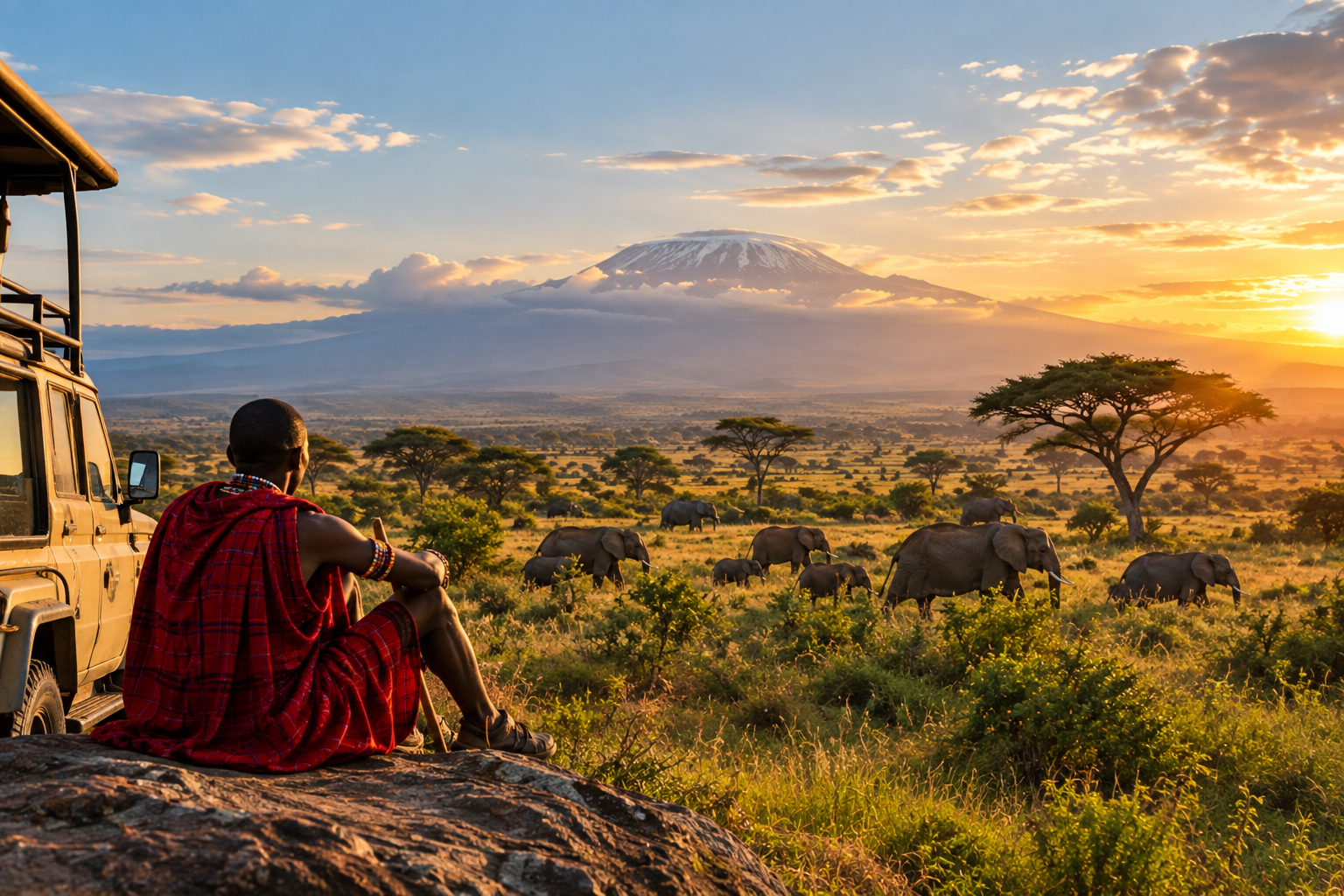
Kenya offers a remarkable range of wildlife and landscapes within one country. You can experience the famous Maasai Mara, see elephants with Mount Kilimanjaro in the background at Amboseli, explore the enormous wilderness of Tsavo, or travel north toward the distinctive landscapes of Samburu.
And a Kenyan trip doesn't have to end with a safari. You can combine wildlife experiences with cultural activities, mountain adventures or time on the Indian Ocean coast.
That variety is one of the reasons Kenya works so well for different types of travellers.
Choosing Where to Go on Safari
Kenya has many protected areas, and each offers a somewhat different experience. You don't necessarily need to visit every major park. The better approach is to choose destinations that fit the experience you're looking for.
Maasai Mara
The Maasai Mara is probably the destination most people associate with a Kenyan safari.
It is part of the wider Serengeti–Mara ecosystem and is well known for its populations of lions, leopards, cheetahs, elephants and other wildlife.
The reserve also becomes an important destination during the annual wildebeest migration, when large numbers of animals move through the wider ecosystem.
If this is your first safari and seeing a wide variety of wildlife is your main priority, the Maasai Mara is an obvious destination to consider.
Amboseli
Amboseli offers one of Kenya's most recognisable safari landscapes.
On clear days, Mount Kilimanjaro rises beyond the plains, creating the dramatic backdrop that appears in many photographs of East Africa. The park is particularly well known for its elephants.
Amboseli can work especially well as part of an itinerary that combines wildlife with the scenery around Kenya's southern border.
Tsavo East and Tsavo West
Tsavo covers a vast area and offers a different feeling from the more concentrated wildlife experiences of the Maasai Mara.
Its scale makes it appealing to travellers who want to experience a larger wilderness landscape and spend time exploring beyond Kenya's most famous safari destination.
Tsavo East and Tsavo West can also be combined with a coastal holiday, making them useful destinations for travellers who want both safari and beach time.
Samburu
Further north, Samburu provides a very different landscape and atmosphere.
The region is drier and more rugged than many of Kenya's southern safari areas, and the wildlife experience is distinct as well.
Samburu can be an excellent choice for travellers who want to explore beyond the country's most commonly visited safari routes.
When Should You Visit Kenya?
There isn't one universally perfect time to visit Kenya.
Your ideal travel period depends on what you want to see, which parks you plan to visit, your budget and how comfortable you are travelling during wetter periods.
June to October is one of the most popular periods because many safari regions experience generally dry conditions, vegetation is often less dense, and wildlife can be easier to find around remaining water sources.
January and February can also offer generally dry conditions in many safari areas.
November and December can bring greener landscapes and fewer visitors, while March to May is associated with the long rains and can offer a different safari experience for travellers who are comfortable with less predictable weather.
For a more detailed breakdown, see our guide to the best time to visit Kenya, which looks at each season, wildlife viewing, migration timing, rainfall and the trade-offs involved in choosing different travel periods.
Understanding the Great Migration
The Great Wildebeest Migration is one of the most famous wildlife events in the world, but it is important to understand what it actually means when planning a trip.
The migration is a natural movement of large herds through the Serengeti–Mara ecosystem. The animals respond to rainfall, grazing conditions and other environmental factors rather than following a fixed human calendar.
Large numbers of wildebeest commonly reach the Maasai Mara from around July, with significant activity often continuing through September and sometimes beyond.
The famous Mara River crossings can be spectacular, but they are also unpredictable. Even if you visit during the commonly associated migration months, there is no guarantee that a crossing will happen on the particular day you are there.
If the migration is one of your main reasons for visiting Kenya, flexibility and good local guiding can make a significant difference.
How Long Should a Kenya Safari Be?
There is no single answer because the right length depends on the destinations you want to visit.
A shorter safari can focus on one major destination, while a longer itinerary can combine several parks and reserves.
A Short Safari
A few days can be enough for a focused experience in one destination, particularly if your main goal is to experience the Maasai Mara.
This approach works well for travellers who have limited time or are combining their safari with another part of Kenya.
A Longer Safari
With more time, you can combine destinations such as the Maasai Mara, Amboseli and Tsavo, although longer travel distances need to be considered when planning the itinerary.
A longer trip can also leave room for cultural experiences, nature activities or a coastal extension.
What Should You Pack for a Kenyan Safari?
You don't need an enormous amount of equipment for a safari, but a few practical items can make the experience much more comfortable.
- Lightweight clothing: Choose comfortable clothes suitable for warm daytime conditions.
- Warm layers: Early-morning and evening game drives can be surprisingly cool.
- Neutral colours: Khaki, beige, olive and similar tones are practical for safari environments.
- Binoculars: Useful for distant wildlife and birdwatching.
- Sun protection: Bring sunscreen, sunglasses and a suitable hat.
- Comfortable footwear: Useful for activities outside the safari vehicle.
- Camera or phone: You'll probably want to document the experience.
Your exact packing list should also depend on the season, accommodation and activities included in your itinerary.
Health and Travel Preparation
Health preparation is an important part of planning any international trip.
Before travelling to Kenya, check the current entry and health requirements that apply to your nationality, travel history and itinerary. Requirements can change, so use current official guidance and speak with an appropriate medical professional about vaccinations, malaria prevention and any other health considerations relevant to your trip.
Travel insurance is also worth considering, particularly for an itinerary involving multiple destinations or activities.
Respecting Kenya's People and Communities
A safari is not only about wildlife.
Kenya is home to many communities, languages, traditions and ways of life. Cultural experiences can add another dimension to your journey when they are approached respectfully and in partnership with local communities.
If you're visiting a community or photographing people, ask for permission rather than assuming that photography is acceptable.
Learning a few words of Swahili is also a simple way to connect with people you meet during your travels. Even a friendly “Jambo” or “Asante” can go a long way.
Safari and Beach: You Don't Have to Choose One
One of the advantages of travelling in Kenya is that you can combine very different experiences in one trip.
After several days of game drives, you might continue toward the Indian Ocean for some time on the coast.
Diani offers beaches and a relaxed coastal atmosphere, while Lamu provides a very different experience shaped by its history, architecture and Swahili culture.
This makes it possible to build an itinerary that combines wildlife, culture and relaxation rather than treating the safari as the entire holiday.
How Much Planning Does a Kenya Safari Require?
A safari involves more decisions than simply choosing a park.
You need to consider your travel dates, destinations, transport, accommodation, game-drive schedules and the amount of time you want to spend in each location.
During popular travel periods, accommodation and safari services can also become heavily booked.
That's why it helps to decide your priorities before choosing an itinerary.
Ask yourself:
- What wildlife do I most want to see?
- Do I want to travel during a dry or greener period?
- Is the Great Migration important to me?
- How many days do I have?
- Would I prefer a luxury, mid-range or budget experience?
- Do I want to combine the safari with the coast?
- Would I like cultural experiences included?
The answers to these questions will help determine the right itinerary for you.
Planning Your First Kenya Safari
Your first safari doesn't have to be complicated.
Start with the experience you want, then work backwards.
If wildlife viewing is your priority, choose your destinations and travel period around that goal. If you're interested in the Great Migration, understand that migration timing is natural and cannot be guaranteed to a specific date. If you prefer quieter travel and greener scenery, consider travelling outside the busiest dry-season periods.
Most importantly, don't feel that you have to see everything in one trip.
Kenya has enough variety to make several different journeys possible.
Start Planning Your Kenya Adventure
A Kenyan safari can be as simple as a few days focused on one reserve or as extensive as a multi-destination journey combining wildlife, culture, mountains and the coast.
The right itinerary is the one that matches your interests, available time and travel style.
Explore our Kenya travel experiences and start planning a journey around the places and experiences you want to discover.
And if you're still deciding when to travel, our guide to the best time to visit Kenya can help you compare the different seasons before choosing your dates.
Frequently Asked Questions
What is the best safari destination in Kenya?
It depends on what you want from your safari. The Maasai Mara is famous for its wildlife and role in the Great Migration, Amboseli is known for its elephants and views toward Mount Kilimanjaro, Tsavo offers enormous wilderness areas, and Samburu provides a very different northern Kenya experience.
What is the best time for a first Kenya safari?
June to October is a popular choice because many safari regions experience generally dry conditions and wildlife can be easier to spot. January and February can also offer good safari conditions. The best period ultimately depends on your priorities.
Can I see the Great Migration in Kenya?
Yes. Large numbers of wildebeest commonly reach the Maasai Mara from around July, with migration activity often continuing through September and sometimes beyond. However, the exact timing varies from year to year.
Are the Mara River crossings guaranteed?
No. River crossings are natural events and cannot be predicted for a specific date. Visiting during the migration period increases your opportunity to witness migration activity, but there is no guarantee that a crossing will happen while you are there.
Can I visit Kenya during the rainy season?
Yes. Rainy periods can bring greener landscapes, fewer visitors and potentially better value. However, rainfall can affect road conditions and some accommodation properties may operate differently during wetter months.
Can I combine a safari with a beach holiday?
Yes. Kenya's Indian Ocean coast makes it possible to combine a safari with a beach or cultural experience in destinations such as Diani or Lamu.
How far in advance should I plan my safari?
It depends on the season, destination and type of accommodation you want. If you're travelling during a popular period or have specific camps and activities in mind, planning earlier gives you more options.


